
Yes, Termites can potentially return after treatment. However, seeing termite activity after a previous treatment does not automatically mean the original treatment failed. Termites live in colonies, can access properties through hidden routes, and may establish new activity when favorable conditions remain around a home.
For homeowners in Richmond, Texas, understanding what can cause termite activity to return is important. A property may have moisture issues, soil-to-structure contact, wood debris, cracks, or other conditions that make it easier for termites to become active again.
The key to long-term termite management is not simply treating termites when they are discovered. It is also about monitoring the property, identifying conditions that support termite activity, and taking preventive steps after treatment.
Why Can Termites Come Back After Treatment?
Termites can return for several reasons. A treatment may address an existing infestation, but the surrounding environment can continue to provide opportunities for future activity.
Termites are also difficult to detect because much of their activity occurs underground, inside soil, behind walls, or within wooden structures. Homeowners may not notice a new colony until visible signs appear.
In some situations, new termite activity can develop after the original colony has been addressed. This is why ongoing monitoring is an important part of long-term termite management.
Does Seeing Termites Mean Treatment Failed?
Not necessarily.
After treatment, homeowners may occasionally notice termite activity. Depending on the treatment method, property conditions, and location of the activity, additional evaluation may be necessary.
A professional termite inspection and treatment near me can connect homeowners with local providers who can inspect the property and determine whether the activity is new, ongoing, or related to previously treated areas.
Instead of assuming that treatment failed, homeowners should have the property assessed when termite activity reappears.
How Termites Find Their Way Back
Termites are constantly searching for suitable sources of food and moisture. Homes can provide both, especially when wooden materials are exposed to soil or moisture is allowed to accumulate around the structure.
Common conditions that may contribute to termite activity include:
- Excess moisture around the foundation
- Leaking plumbing
- Poor drainage
- Wood debris near the structure
- Soil touching wooden components
- Cracks and structural openings
- Damp crawlspaces
- Landscaping conditions that retain moisture
Addressing these conditions can make a property less attractive to termites.
Moisture Can Increase Termite Risk
Moisture management is an important part of termite prevention. Leaking pipes, clogged gutters, poor drainage, and water collecting near the foundation can create conditions that support termite activity.
Homeowners should regularly inspect areas around the foundation and exterior walls for signs of persistent moisture.
If water consistently collects near the structure after rainfall, improving drainage may help reduce conditions that encourage pests.
Moisture problems should be addressed alongside termite treatment rather than treating them as separate issues.
Why Regular Inspections Matter
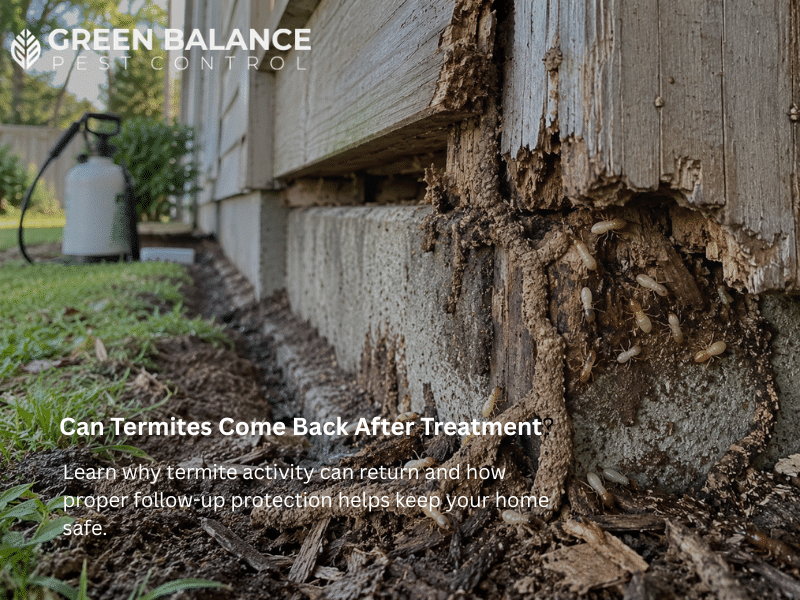
Termites can remain hidden for long periods. By the time homeowners notice damaged wood, discarded wings, mud tubes, or other signs, activity may already be established.
Regular inspections provide an opportunity to identify potential problems earlier.
A professional inspection can examine areas that homeowners may not routinely check, including foundations, crawlspaces, structural wood, exterior walls, and other potential termite pathways.
This is an important part of Pest Inspection and Prevention, especially for homes with previous termite activity.
What Are the Signs of Termites Returning?
Homeowners should know what to look for after treatment.
Potential signs include mud tubes along foundations or walls, discarded wings near windows, hollow-sounding wood, damaged wooden materials, bubbling or uneven surfaces, and visible termite activity.
Not every sign automatically confirms an active infestation. Other insects and moisture-related issues can sometimes create similar evidence.
If something appears unusual, professional inspection can help determine the cause.
How Anti-Termite Treatments Help
Professional termite management can involve different treatment methods depending on the property, termite species, infestation location, and construction characteristics.
Anti Termite Treatment Services may be used to address active infestations or provide protection against future termite activity.
The appropriate treatment should be determined after evaluating the property rather than applying the same method to every home.
Homeowners should also ask about follow-up inspections and what maintenance steps are recommended after treatment.
What Is Anti-Termite Control?
Termite control is broader than simply eliminating visible termites. It involves addressing the conditions that allow termites to access and remain around a property.
An Anti Termite Control Service may involve inspection, treatment, monitoring, and recommendations for reducing termite-friendly conditions.
The exact approach can vary depending on the property’s construction, termite activity, and treatment history.
Can Termites Return to the Same Area?
Yes. If environmental conditions remain favorable, termites may eventually become active in the same general area.
For example, if moisture continues to accumulate near a foundation or wooden materials remain in contact with soil, the property may continue to provide suitable conditions.
This is why treating the visible problem without addressing underlying conditions may not provide complete long-term protection.
How to Prevent Termites After Treatment
Homeowners can take several practical steps after professional treatment.
Reduce Moisture
Repair leaking pipes, faucets, and drainage problems. Keep gutters clean and direct water away from the foundation.
Remove Wood Debris
Do not store unnecessary wood, cardboard, or other cellulose-based materials directly against the home.
Maintain Landscaping
Keep plants, mulch, and other landscaping materials from creating excessive moisture against exterior walls.
Inspect the Foundation
Look for cracks, mud tubes, damaged areas, and other unusual signs around the exterior.
Monitor Previously Affected Areas
Pay particular attention to locations where termite activity was previously discovered.
These simple maintenance habits can support a broader termite prevention strategy.
Are Preventive Termite Plans Worth Considering?
Homes with previous termite activity may benefit from ongoing monitoring rather than relying exclusively on one-time treatment.
Preventative Pest Control Plans can provide scheduled inspections or treatments depending on the provider and service agreement.
The appropriate schedule depends on the property, its history, environmental conditions, and the type of termite risk involved.
Regular monitoring can help homeowners identify new activity before it becomes a larger problem.
What Happens During a Follow-Up Inspection?
A follow-up inspection typically focuses on areas where termites were previously found and other locations where activity could develop.
The technician may look for new mud tubes, wood damage, moisture issues, entry points, and other evidence.
Follow-up inspections are particularly useful because they allow professionals to compare current conditions with previous findings.
Homeowners should keep records of previous termite treatments and inspections when possible. This information can help technicians understand the property’s history.
Can Homeowners Prevent Termites Completely?
There is no practical way to guarantee that termites will never appear on a property. Homes are exposed to environmental conditions, soil, landscaping, moisture, and surrounding properties.
However, homeowners can reduce risk through regular maintenance and monitoring.
A strong prevention strategy combines moisture management, structural maintenance, professional inspections, and appropriate treatment when termite activity is discovered.
When Should You Schedule Another Inspection?
If you see termites, mud tubes, discarded wings, new wood damage, or other suspicious signs after treatment, contact a pest control professional for an evaluation.
You should not assume that every termite-related sign means a new infestation, but ignoring potential evidence can allow an active problem to continue unnoticed.
An inspection provides a clearer understanding of what is happening and whether additional treatment is necessary.
Why Professional Termite Management Matters
Termites are different from many household pests because they can cause structural damage while remaining largely hidden.
Professional pest specialists have the equipment and experience to inspect difficult-to-reach areas and identify potential termite activity.
A professional approach can also combine treatment with recommendations for moisture control, structural maintenance, and ongoing monitoring.
This makes termite management more proactive rather than simply reacting whenever termites become visible.
Conclusion
So, can termites come back after treatment? Yes, they can. New colonies may become active, environmental conditions may remain favorable, or previously overlooked access points may provide opportunities for future activity.
However, termite activity after treatment does not automatically mean that the original treatment was unsuccessful. The right response is to have the property inspected and determine what is causing the activity.
For Richmond homeowners, long-term termite protection should involve more than a single treatment. Regular inspections, moisture management, proper landscaping, removal of wood debris, and appropriate professional services can all contribute to better protection.
If you have previously dealt with termites, staying proactive can help you identify potential problems earlier and protect your home from avoidable damage.
FAQs
Can termites come back after treatment?
Yes. New termite activity can develop when favorable conditions remain around a property or when new colonies access the structure.
Does seeing termites after treatment mean the treatment failed?
Not necessarily. Additional inspection is needed to determine whether the activity is new, ongoing, or related to a previously treated area.
How can I prevent termites from returning?
Reduce moisture, fix leaks, maintain drainage, remove wood debris, keep landscaping properly managed, and schedule regular inspections.
How often should a home be inspected for termites?
Inspection frequency depends on the property’s history, construction, environmental conditions, and termite risk. Homes with previous activity may benefit from regular monitoring.
What are signs that termites have returned?
Possible signs include mud tubes, discarded wings, new wood damage, hollow-sounding wood, and visible termite activity.
Can moisture attract termites?
Moisture can create conditions that are favorable for termite activity. Leaks, poor drainage, and water accumulation around foundations should be addressed.
Are preventive termite plans necessary after treatment?
A preventive plan may be useful for properties with previous termite activity. Regular monitoring can help identify new activity earlier.
What should I do if I see termites after treatment?
Contact a professional pest control provider for an inspection. Avoid assuming that additional treatment is automatically necessary until the source and extent of activity are evaluated.