
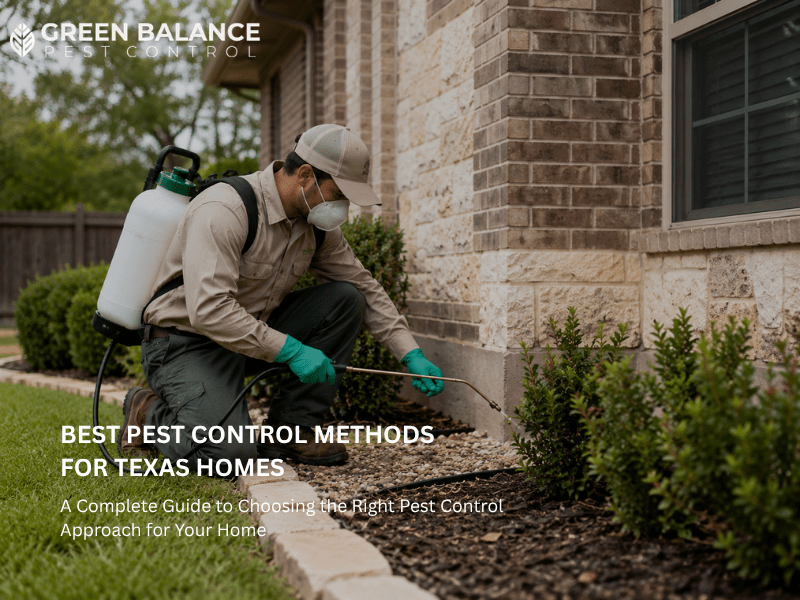
Keeping a home free from pests is not simply about eliminating insects when they appear. Effective pest management involves understanding why pests enter a property, identifying vulnerable areas, preventing future infestations, and choosing treatment methods that fit the situation.
Texas homeowners face a wide variety of pest challenges throughout the year. Warm weather, moisture, landscaping, and changing seasonal conditions can create opportunities for mosquitoes, ants, termites, rodents, spiders, and other pests.
The good news is that homeowners do not have to wait for an infestation to become serious. A combination of prevention, inspection, maintenance, and professional treatment can provide reliable protection.
Understanding Pest Problems in Texas Homes
Every pest problem is different. Mosquitoes are primarily an outdoor concern, while rodents may enter attics or wall cavities. Termites can remain hidden within structures, and ants may travel between outdoor colonies and indoor food sources.
Because different pests behave differently, the best solution depends on the type of pest, location, severity, and conditions around the property.
This is why a professional approach begins with inspection rather than immediately applying the same treatment everywhere.
Why Residential Pest Control Matters
Pests can affect more than the appearance and comfort of a home. Certain infestations can damage property, contaminate food, disturb sleep, or create concerns for household members.
Residential Pest Control Services can help homeowners address existing pest activity while developing strategies for future prevention.
A professional plan may include inspection, targeted treatment, exterior protection, recommendations for property maintenance, and follow-up services.
Common Pest Control Methods
There is no single method that works for every pest. Professional pest management may involve several strategies depending on the situation.
Inspection
Inspection helps identify pest activity, nesting locations, entry points, moisture sources, and other conditions.
Targeted Treatment
Treatment focuses on areas where pests are active or likely to travel rather than unnecessarily treating unrelated areas.
Exclusion
Exclusion involves reducing opportunities for pests to enter by addressing cracks, gaps, damaged screens, vents, and other structural openings.
Prevention
Ongoing monitoring and maintenance help reduce the likelihood of future infestations.
Eco-Friendly Pest Management
Many homeowners are increasingly interested in reducing unnecessary chemical exposure and choosing environmentally responsible approaches.
Eco Friendly Pest Control can incorporate prevention, targeted treatments, habitat management, and other strategies designed to address pests responsibly.
The appropriate method depends on the pest and property, so homeowners should discuss treatment options and safety considerations with a qualified professional.
Safe Treatment for Families
Households with children and pets may have additional concerns when choosing pest management services.
Professional treatment should consider where people and animals spend time and how products are applied.
Homeowners should always follow instructions regarding treated areas, product drying, ventilation, and re-entry.
The goal is to solve the pest problem while applying treatments responsibly.
Integrated Pest Management
Integrated pest management takes a broader approach to pest control. Instead of depending on one treatment method, it combines monitoring, prevention, environmental management, exclusion, and targeted treatment.
Integrated Pest Management Solutions can be particularly useful for homeowners who want to reduce recurring pest problems over time.
This approach focuses on understanding the reason pests are present and making practical changes to reduce future activity.
When Professional Pest Control Is Necessary
Some pest problems can be reduced through basic home maintenance, but professional assistance may be necessary when infestations become persistent or difficult to identify.
Warning signs include repeated pest sightings, nests, droppings, structural damage, unexplained odors, and pest activity in multiple areas.
Termites and rodents are examples of pests that can remain hidden, making professional inspection especially valuable.
Choosing a Pest Control Provider
Homeowners should consider experience, communication, treatment methods, safety practices, and prevention recommendations when selecting a provider.
A reliable pest control company should be willing to explain the problem, describe the recommended approach, and provide information about follow-up care.
Avoid choosing a service based only on the lowest price. A treatment that does not address the source of the infestation may cost more in the long run.
One-Time Treatment vs Ongoing Protection
A one-time treatment may be appropriate for certain situations, but recurring pest problems often require a more consistent strategy.
Homes located near wooded areas, properties with extensive landscaping, and houses with previous infestation history may benefit from ongoing monitoring.
Year Round Pest Control focuses on maintaining protection instead of waiting for pests to become a major problem.
Preventing Pests Between Professional Treatments
Homeowners can make professional pest control more effective through regular maintenance.
Keep food stored properly, clean spills quickly, repair leaks, remove unnecessary clutter, maintain landscaping, and inspect the exterior regularly.
Pay attention to potential entry points around doors, windows, plumbing, vents, roofs, and foundations.
Small maintenance tasks can make a meaningful difference when performed consistently.
Building a Long-Term Pest Prevention Strategy
The strongest pest management strategy is proactive.
Start by identifying the pests common to your property. Next, inspect potential entry points and attractants. Then establish a maintenance routine and seek professional assistance when necessary.
Rather than reacting to every new pest sighting, homeowners can use monitoring and prevention to identify problems earlier.
This approach can make pest management more predictable and help protect the comfort and condition of the home.
Conclusion
Effective pest control is about more than eliminating visible insects. Texas homeowners need a combination of inspection, prevention, targeted treatment, exclusion, and ongoing property maintenance.
Professional services can provide expertise when pest problems become difficult to manage, while everyday homeowner habits can reduce the conditions that attract pests.
By taking a proactive approach and choosing appropriate treatment methods, homeowners can create a cleaner, more comfortable, and better-protected living environment throughout the year.
FAQs
What is the best pest control method for a home?
The best method depends on the pest, infestation level, property conditions, and potential entry points. Professional inspection can help determine the appropriate strategy.
Is eco-friendly pest control effective?
Eco-friendly approaches can be effective when combined with proper prevention, monitoring, exclusion, and targeted treatment.
How can I prevent pests from entering my home?
Seal appropriate gaps, maintain screens, control moisture, store food properly, remove clutter, and maintain the property’s landscaping.
How often should a home receive pest control?
The ideal schedule depends on the property’s pest risks and history. Some homes may benefit from recurring or year-round protection.
When should I hire professional pest control?
Professional help is recommended when pests keep returning, infestations are widespread, or there are signs of hidden activity or property damage.