
If you have treated fire ant mounds in your yard only to see new ones appear a few weeks later, you are not alone. Fire ants can be persistent, especially in warm climates such as Richmond, Texas. You may eliminate a visible mound, but other colonies can remain nearby or new queens can establish colonies when conditions are favorable.
The key to managing recurring fire ants is understanding why they keep returning. Treating only the ants you can see may provide temporary relief, while factors such as soil conditions, moisture, food sources, weather, and nearby colonies can continue supporting their activity.
This guide explains why fire ants repeatedly appear in residential yards and what homeowners can do to reduce their activity over the long term.
Why Do Fire Ants Keep Coming Back?
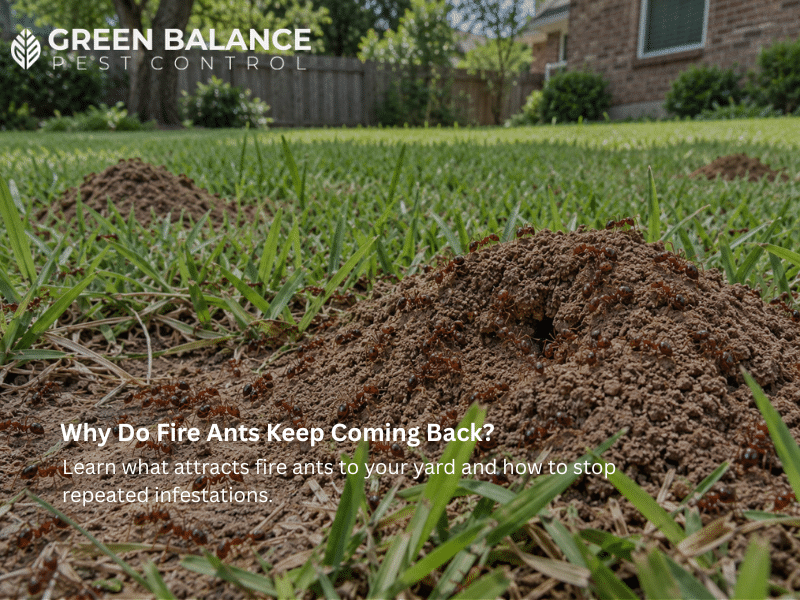
Fire ants are social insects that live in colonies. A visible mound represents only part of the colony’s activity, and there may be additional colonies elsewhere on the property or nearby.
When one mound is treated, other colonies may remain unaffected. New mounds can also appear after rain, landscaping changes, or periods of favorable weather.
Effective Fire Ant Control Services should therefore look beyond individual mounds and consider the overall conditions around your property.
Fire Ant Colonies Can Be Larger Than They Look
A fire ant mound does not necessarily represent the entire colony. Workers constantly move through underground tunnels searching for food, water, and suitable nesting conditions.
The visible mound is simply where soil has been pushed to the surface. Much of the colony exists underground, making it difficult to determine its full size just by looking at the lawn.
This is one reason homeowners may believe that treatment failed when they notice another mound later. The new activity may come from a separate colony that was never directly affected.
Rain Can Trigger New Fire Ant Activity
Weather plays an important role in fire ant behavior. After periods of rainfall, soil becomes easier for ants to work with, and colonies may relocate or establish new nesting areas.
Richmond’s warm climate can provide long periods when fire ants remain active. After heavy rain, homeowners may suddenly notice fresh mounds appearing across lawns, gardens, and landscaped areas.
Regular property inspections after significant weather changes can help identify new activity before colonies become well established.
Why Fire Ant Mounds Reappear After Treatment
One of the most common reasons for recurring fire ants is treating only the visible mound.
Individual Mound Treatment
An individual fire ant mound service can address a specific mound, but additional colonies may exist elsewhere on the property.
If the surrounding lawn is not inspected, homeowners may treat one location while another colony continues growing only a short distance away.
Multiple Colony Activity
Fire ants can establish several colonies across a single property. Treating one mound does not automatically mean that every colony has been eliminated.
For properties with widespread activity, a broader treatment strategy may be more appropriate than repeatedly treating individual mounds.
Food and Moisture Can Attract Fire Ants
Like many pests, fire ants need access to food and water. Certain conditions around a property can make a yard more attractive to them.
Pet food left outdoors, food scraps, insects, organic debris, and other materials can provide potential food sources. Irrigation systems, leaking outdoor faucets, poor drainage, and areas that remain damp can also create favorable conditions.
Reducing these attractants will not necessarily eliminate an established colony, but it can contribute to a less favorable environment.
Your Landscaping Can Influence Fire Ant Activity
Landscaping is another factor homeowners should consider. Dense vegetation, mulch, garden beds, and areas of undisturbed soil can provide suitable locations for fire ants to establish colonies.
Regularly maintaining your yard can make it easier to identify new mounds. Keep grass maintained, remove unnecessary debris, and inspect areas around patios, sidewalks, fences, gardens, and foundations.
Pay particular attention to areas where irrigation regularly keeps the soil moist.
Are Fire Ants More Active During Certain Seasons?
Fire ants can remain active for much of the year in warm regions, but their activity can increase when temperatures and soil conditions are favorable.
Spring and summer often bring increased outdoor pest activity. Rainfall followed by warm weather can create particularly favorable conditions for colony development.
Using Seasonal Pest Control Services can help homeowners adjust their prevention strategy based on changing environmental conditions rather than waiting until large numbers of mounds appear.
Why DIY Fire Ant Treatment May Not Provide Lasting Results
Store-bought products can be useful for certain situations, but recurring infestations may require a more comprehensive approach.
A homeowner may successfully eliminate the ants around one mound while missing colonies elsewhere. In other cases, treatment may not reach the areas where ants are nesting or traveling.
Another challenge is knowing which treatment approach is appropriate for the property’s conditions. Applying products incorrectly or unnecessarily can also create safety and environmental concerns.
For persistent problems, professional evaluation can help determine why the infestation continues.
How Professional Fire Ant Treatment Works
A professional approach generally begins with evaluating the property. The technician can identify active mounds, areas with recurring activity, environmental conditions, and locations where fire ants are likely to establish colonies.
Depending on the situation, treatment may focus on individual mounds, broader lawn areas, or a combination of strategies.
An outdoor fire ant extermination service can be particularly useful when fire ants are affecting large sections of a yard or repeatedly appearing in areas used by children, pets, or homeowners.
Protecting Your Lawn From Recurring Fire Ants
Your lawn is one of the most important areas to monitor. Walk around the property regularly and look for newly formed mounds.
When checking the yard, inspect areas around trees, fences, walkways, patios, landscaping beds, and outdoor structures.
A consistent Lawn Fire Ant Control strategy can help reduce recurring activity and make outdoor areas more comfortable for families.
Homeowners should also maintain proper drainage, avoid unnecessary outdoor food sources, and keep landscaping manageable.
What About Fire Ants Near the Home?
Fire ants do not necessarily need to build their mounds directly against a house to become a problem. Colonies may establish themselves in the yard and create risks for people and pets using outdoor spaces.
If mounds are appearing close to entrances, patios, play areas, or frequently used sections of the property, it is worth addressing them promptly.
Homeowners searching for Fire Ant Removal Near their area should consider a provider that can evaluate the entire property rather than simply treating the mound that is easiest to see.
How to Reduce New Fire Ant Mounds
There is no single action that guarantees fire ants will never return. However, consistent property maintenance can reduce favorable conditions.
Homeowners can:
- Inspect lawns regularly for new mounds.
- Keep grass and landscaping maintained.
- Remove unnecessary organic debris.
- Store outdoor food securely.
- Address leaking faucets and irrigation problems.
- Improve areas with poor drainage.
- Monitor areas where fire ants have previously appeared.
- Schedule professional treatment when activity becomes recurring.
These simple steps can complement professional pest management and make it easier to detect new activity early.
Should You Treat Fire Ants Before They Become a Problem?
Waiting until fire ant mounds cover the yard can make management more challenging. If you already know that your property has recurring fire ant activity, proactive monitoring may be more practical than repeatedly reacting to individual mounds.
Regular inspections can help identify new activity while colonies are still developing.
A professional can also help homeowners understand which parts of their property are most vulnerable and what preventive measures may be appropriate.
When Should You Call a Professional?
Consider professional assistance if fire ants repeatedly return after treatment, multiple mounds appear across the property, or colonies are located near areas frequently used by children and pets.
Professional help may also be useful when you cannot determine why new colonies continue appearing.
Rather than repeatedly treating individual mounds without understanding the broader problem, an inspection can help identify patterns and potential contributing factors.
Conclusion
Fire ants keep coming back for several reasons. New colonies can develop, nearby colonies may survive treatment, rainfall can encourage activity, and favorable food, moisture, and landscaping conditions can support their presence.
The most effective long-term approach combines regular lawn maintenance, early detection, environmental management, and appropriate professional treatment when necessary.
If fire ants continue appearing despite your efforts, do not assume that treating another visible mound is the only answer. Looking at the entire property can provide a better understanding of where the ants are coming from and why they continue returning.
With consistent monitoring and the right prevention strategy, Richmond homeowners can reduce recurring fire ant activity and enjoy their outdoor spaces with greater confidence.
FAQs
Why do fire ants keep coming back after treatment?
Fire ants may return because other colonies remain nearby, new colonies establish after favorable weather, or the original treatment only addressed a visible mound.
How can I stop fire ants from coming back?
Regularly inspect your yard, maintain landscaping, reduce excess moisture, remove outdoor food sources, and consider professional treatment for recurring infestations.
Does rain cause more fire ant mounds?
Rain can create favorable soil conditions and may increase visible fire ant activity, particularly when followed by warm weather.
Should I treat every fire ant mound individually?
Individual mound treatment may help with isolated activity, but multiple mounds across a property may require a broader control strategy.
Are fire ants active all year in Richmond, Texas?
Warm conditions can allow fire ants to remain active for much of the year, although activity can vary with temperature, rainfall, and soil conditions.
When should I call a professional for fire ants?
Consider professional assistance when mounds repeatedly return, infestations cover multiple areas, or fire ants are located near frequently used outdoor spaces.