
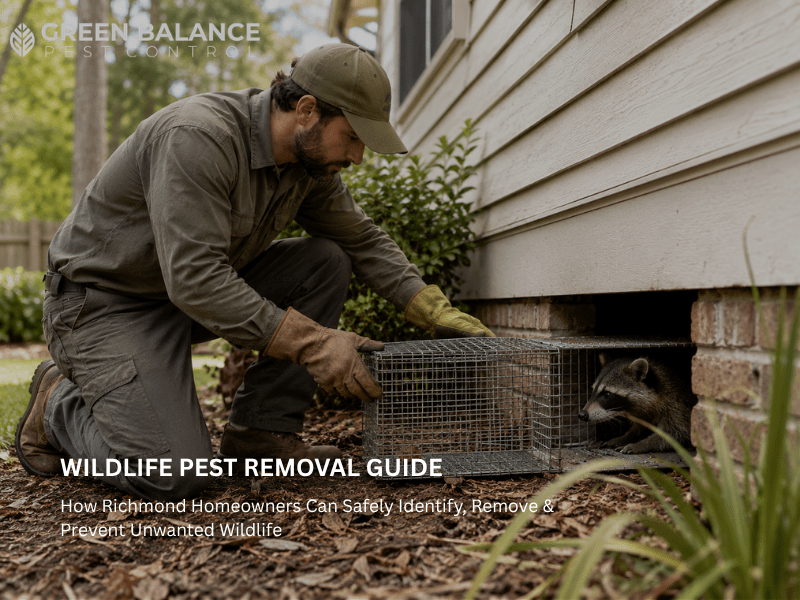
Discovering scratching sounds in the attic, droppings in the garage, or damaged materials around your home can be unsettling. Wildlife and rodents can enter residential properties through surprisingly small openings, looking for food, shelter, and protection from changing weather conditions.
For Richmond homeowners, addressing these problems quickly is important. Rodents can damage insulation, wiring, stored belongings, and other materials while creating unsanitary conditions.
A successful approach involves more than removing the animal you can see. Homeowners also need to identify how the pest entered, what attracted it, and how future entry can be prevented.
Common Wildlife and Rodent Problems
Residential properties can experience problems with mice, rats, and other unwanted wildlife. These pests may enter garages, attics, crawlspaces, sheds, wall cavities, or other sheltered areas.
They often become more noticeable when searching for food or shelter.
Signs may include scratching sounds, droppings, gnaw marks, nesting materials, unpleasant odors, damaged insulation, and disturbed stored items.
Why Rodents Enter Homes
Rodents are opportunistic animals. If they find accessible food, water, warmth, and shelter, a home can become an attractive place to live.
Common attractants include unsecured garbage, pet food, bird seed, food storage, compost, and clutter around the exterior.
Small openings around foundations, roofs, doors, vents, and utility lines can also provide access.
Signs You May Have a Rodent Problem
Droppings are one of the most common signs. Homeowners may also hear scratching or movement inside walls and ceilings, particularly when the property is quiet.
Gnaw marks on wood, plastic, food packaging, or wiring should also be taken seriously.
Nests made from paper, insulation, fabric, or other soft materials can indicate that rodents have established a sheltered location.
Why Professional Removal Matters
Rodent problems can be difficult to solve by simply placing a few traps around the home.
If the entry point remains open, new rodents can continue entering. If nesting areas are not addressed, the problem can persist.
Professional Rodent Control and Removal focuses on identifying activity, removing the pest, and addressing conditions that may allow the problem to return.
Identifying Entry Points
A detailed inspection should include the exterior as well as interior areas.
Check around rooflines, vents, garage doors, foundation gaps, utility pipes, windows, and damaged screens.
Even a small opening can become an entry route for rodents.
Homeowners should avoid sealing an opening without first determining whether animals are still inside, as trapping wildlife or rodents inside a structure can create additional problems.
Rodent-Proofing Your Property
Once active pests have been addressed, exclusion becomes an important part of prevention.
rodent proofing home services in Richmond TX can focus on identifying and addressing potential entry points around the property.
Homeowners can also help by storing food securely, keeping garbage containers closed, removing unnecessary outdoor clutter, and maintaining landscaping around the home.
Why Local Expertise Helps
Every property has its own challenges. Older homes may have different structural gaps than newer properties, while heavily landscaped homes may have more opportunities for pests to find shelter.
Working with Local Pest Control Experts can provide valuable knowledge about common pest activity and property conditions in the Richmond area.
A local provider can assess your particular home instead of relying on a generic solution.
Protecting Attics and Garages
Attics and garages are particularly vulnerable because they often contain stored materials, insulation, boxes, and other potential nesting resources.
Keep storage areas organized and avoid leaving food, pet supplies, or bird seed exposed.
Inspect these spaces periodically for droppings, odors, damaged materials, or unusual noises.
Early detection can make it easier to address a problem before significant damage occurs.
Long-Term Wildlife and Rodent Prevention
Prevention should continue after removal. Regularly inspect the exterior of your home and repair damage as soon as it appears.
Trim branches that touch the roof, maintain screens and vents, secure garbage, and keep potential food sources away from the structure.
If activity returns, schedule another inspection rather than assuming the problem will disappear on its own.
Choosing Professional Help
When searching for professional rodent removal experts near me, homeowners should look for experience, clear communication, safe practices, and a focus on prevention.
Ask what the inspection includes, how entry points will be addressed, and what follow-up recommendations are provided.
A complete solution should focus on both the current infestation and the conditions that allowed it to happen.
Conclusion
Wildlife and rodent problems can cause stress and property damage, but homeowners can significantly reduce the risk through early detection and prevention.
Understanding entry points, removing attractants, maintaining the exterior, and addressing infestations quickly are all important steps.
Professional removal combined with exclusion and ongoing maintenance can provide a stronger long-term approach to protecting your Richmond home.
FAQs
What are common signs of rodents in a home?
Droppings, scratching noises, gnaw marks, nesting materials, odors, and damaged food packaging can indicate rodent activity.
How do rodents get inside homes?
They can enter through gaps around foundations, roofs, vents, doors, utility lines, and other openings.
How can I prevent rodents?
Secure food and garbage, remove outdoor clutter, maintain landscaping, inspect the exterior, and seal appropriate entry points.
Should I seal a hole if rodents may still be inside?
It is best to determine whether animals are still inside before permanently closing an entry point.
When should I call a professional?
Professional assistance is recommended when rodent activity is recurring, widespread, difficult to locate, or causing property damage.