
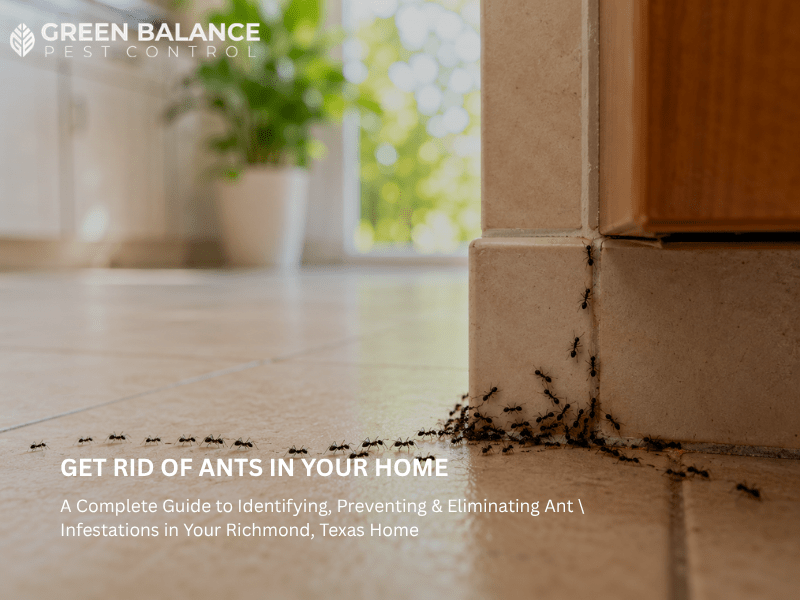
Finding a line of ants moving across your kitchen counter can be frustrating. At first, it may seem like a small issue that can be solved with a quick spray. However, repeated ant activity often means there is an established colony somewhere nearby.
Richmond, Texas, provides many of the conditions ants need to survive and reproduce. Warm weather, moisture, landscaping, and easy access to food can make residential properties attractive to different types of ants.
Understanding why ants enter your home and how colonies behave can help you choose the right approach to controlling them.
Why Do Ants Enter Homes?
Ants usually enter homes in search of food, water, or shelter. Small crumbs, sugary spills, pet food, leaking faucets, and moisture around plants can attract foraging ants.
They may enter through cracks around windows, doors, foundations, plumbing lines, and other openings.
Once an ant finds a reliable food source, it can leave a chemical trail that helps other ants follow the same route. This is why a few ants can quickly turn into a visible trail.
Common Ant Problems Around Richmond Homes
Different ant species can behave differently, but homeowners often notice activity around kitchens, bathrooms, gardens, patios, and foundations.
Outdoor colonies may remain hidden beneath soil, landscaping materials, rocks, or other protected areas.
Indoor sightings can indicate that ants have discovered an easy food or water source or have established a nest within or close to the structure.
Signs of an Ant Infestation
The most obvious sign is a consistent trail of ants. However, homeowners should also look for small piles of soil, ants emerging from cracks, activity around plumbing, and repeated sightings in the same areas.
If ants disappear temporarily after spraying but return days later, the colony may still be active.
A professional Ant Infestation Control Service can help identify where the ants are coming from and determine the most appropriate control strategy.
Why Spraying Visible Ants May Not Solve the Problem
Killing visible ants can provide temporary relief, but it does not necessarily eliminate the colony.
Worker ants may be only a small part of the overall population. If the nest remains active, additional workers can continue entering the home.
This is why effective ant management focuses on the colony, entry points, food sources, and environmental conditions rather than simply killing the ants that are visible.
Perimeter Protection for Your Home
The exterior of your home plays an important role in ant prevention. Cracks around the foundation, doors, windows, and utility openings can become entry points.
A Perimeter Pest Control Treatment can be part of a broader strategy for reducing pest activity around the exterior of a property.
Keeping vegetation trimmed away from walls and reducing debris around the foundation can also make the property less attractive to ants.
Protecting the Interior
Inside the home, sanitation is one of the most important preventive measures.
Keep countertops clean, store food in sealed containers, clean pet feeding areas, and empty trash regularly.
Pay special attention to sugary foods and liquids because many ant species are attracted to these resources.
Also repair leaking pipes and faucets that may provide ants with a consistent water source.
Creating a Strong Home Pest Barrier
A home’s exterior can act as its first line of defense against insects.
Sealing cracks around doors and windows, repairing damaged screens, maintaining weather stripping, and closing openings around pipes can reduce potential entry routes.
Home Pest Protection Services can complement these maintenance efforts by identifying areas where pests may be entering or gathering around the property.
When Should You Call a Professional?
Professional help may be appropriate when ants continue returning, appear in multiple rooms, emerge from walls, or become a recurring problem.
It is also worth scheduling an inspection if you cannot determine where the ants are coming from.
A professional can identify potential nesting areas and recommend a treatment plan based on the type and severity of the infestation.
Long-Term Ant Prevention
Long-term prevention requires consistency. Regularly inspect the exterior of your home, keep landscaping maintained, remove standing water, and address cracks or gaps promptly.
Do not ignore recurring ant trails. Repeated activity can indicate an underlying colony that needs attention.
For homeowners dealing with persistent infestations, combining professional treatment with preventive maintenance can provide stronger long-term protection.
Conclusion
Ants may be small, but a persistent infestation can quickly become a major household frustration. The key is understanding why they are entering your home and addressing the colony and conditions supporting their activity.
Keeping food sealed, eliminating moisture sources, maintaining your landscaping, and sealing entry points can help reduce ant problems.
When activity continues despite these efforts, professional pest control can identify the source and provide targeted solutions designed to address the problem more effectively.
FAQs
Why are ants coming into my house?
Ants usually enter homes looking for food, water, or shelter. Crumbs, sugary spills, moisture, and small entry points can attract them.
Why do ants keep coming back after spraying?
Spraying visible ants may not eliminate the colony. If the nest remains active, new ants can continue entering your home.
How can I prevent ants?
Keep food sealed, clean spills quickly, repair leaks, maintain landscaping, and seal cracks around doors, windows, and foundations.
When should I hire professional ant control?
Consider professional help when any activity is recurring, widespread, or coming from difficult-to-reach areas.
Can perimeter treatment help with ants?
Exterior treatments can help reduce pest activity around potential entry points when combined with proper property maintenance.